
Best Tile Flooring For Wet Pacific Northwest Climate

Table of Contents
Life in the beautiful Pacific Northwest means experiencing stunning scenery and a consistently wet climate. The moisture constantly challenges the flooring in your Portland home, as the city receives more than 43 inches of rainfall annually and maintains high humidity levels. This is why choosing the best tile flooring for wet Pacific Northwest climate conditions is essential for long-term durability and safety.
Selecting the best tile flooring for wet Pacific Northwest climate homes is not only about appearance—it is a critical investment in the lifespan, safety, and comfort of your living space. A poor choice can lead to costly damage, while the right tile flooring will provide decades of reliable performance in Oregon’s damp environment.
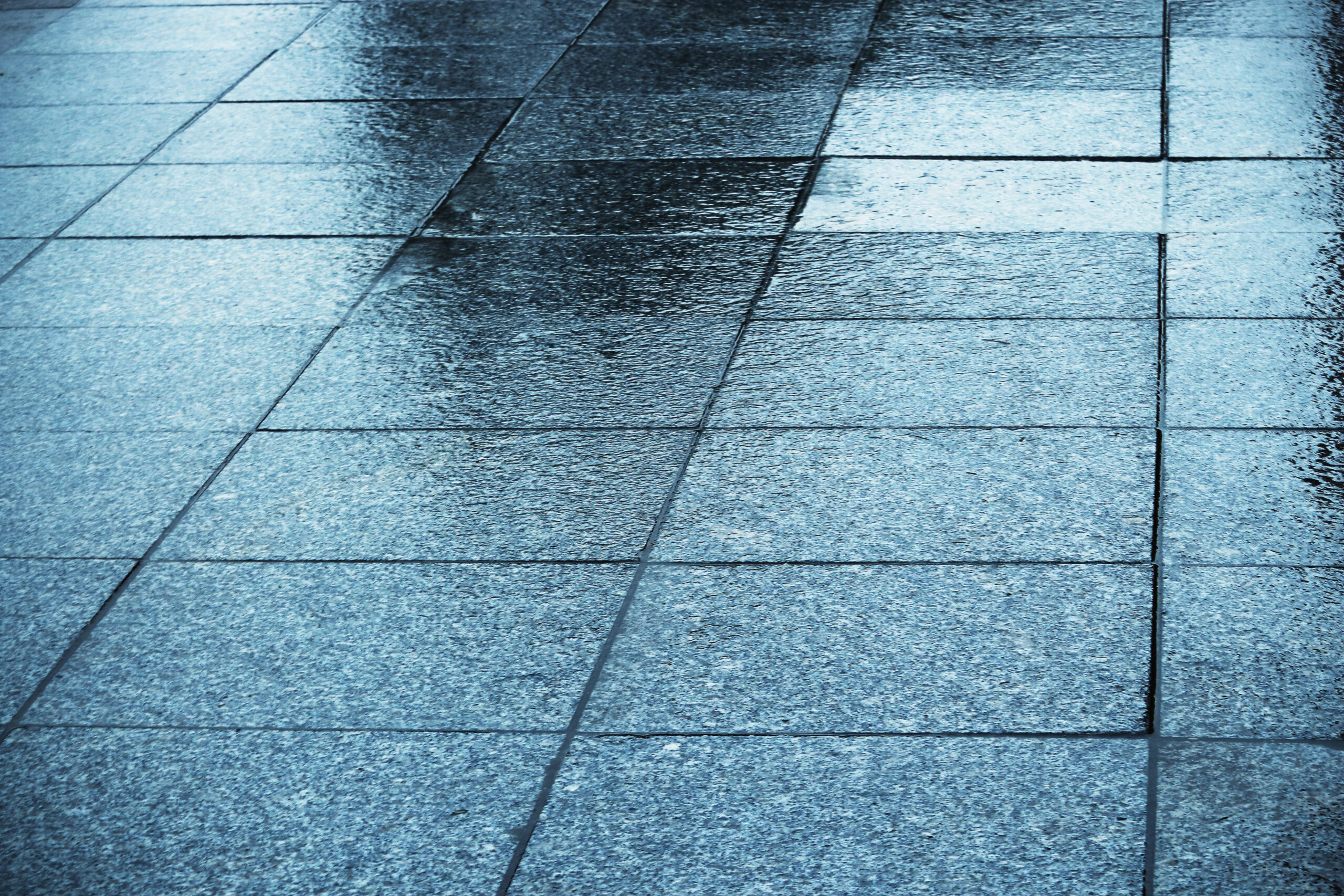
1. Comparing Porcelain and Ceramic: Water Resistance Wars.
It is the most important step to know the difference between porcelain and ceramic when choosing tile to be used in wet areas. Both of them are good options, but one of them differs greatly in its efficiency in wet conditions.
The Champion: Porcelain Tile
Porcelain is widely regarded as the best tile flooring for wet Pacific Northwest climate homes because of its extremely low water absorption rate and resistance to humidity.
According to industry experts, moisture-resistant materials are essential in high-humidity regions, especially when selecting flooring for damp environments.
Porcelain tile is the one that has no alternative in any region of your Oregon house that is exposed to moisture. It is better than that because of its production method: a fine clay dial mix is fired at a very high temperature (1200-1400 o C ). This is known as vitrification and forms a tile that has an absorption rate of 0.5 percent or lower of water; this is practically waterproof. This compact glassy construction implies that the water is unable to penetrate this material, and the swelling, mold growth and staining typical of less dense materials are avoided.
- Perfect Match: Bathroom flooring, shower walls, kitchen floors, mudrooms and any other entryway that gets rain-tracked.
- Key Benefit: The durability and stain resistance are exceptional, making it the perfect choice in busy family homes.
The Contender: Ceramic Tile
Ceramic tile is composed of a mixture of natural clay and is fired at a reduced temperature (1000-1200 o C), thus making it porous. Although it is frequently glazed to add more protection, compared to porcelain, it is not as waterproof. Due to this reason, it can be a practical and in many cases less costly alternative to bathroom walls or less exposed to water areas.
- Ideal On: Bathroom walls (not directly under the shower spray), kitchen backsplashes and low-spread areas.
- Important Strength: Simpler to cut, lighter and frequently more affordable, so that it can be used in projects involving complex cuts or having a smaller budget.
2. Safety First: Making Wet Floors Slip-Resistant.
When selecting the best tile flooring for wet Pacific Northwest climate, slip resistance is just as important as water resistance.
A floor with a beautiful finish which turns too slippery when wet is a great liability. Slip resistance cannot be compromised in a wet climate, particularly in bathrooms and kitchens.
Look Beyond the Shine
High-gloss or polished finishing is always the slickest. Water covering those smooth tiles puts the risk of falls and slips of people at a point of drastic increase. Rather, focus on tiles, which have a matte, textured or honed finish. These surfaces disperse the thin film of water, which offers far better foot traction. A honed finish can be a safer, soft-matte, and safer option to a polished finish, in order to achieve a natural stone appearance.
Understand the Ratings
Safety can be measured. Find tiles that are wet-rated. The dynamic coefficient of Friction (DCOF) is used to determine slip resistance; the value should be 0.42 or higher (on wet floors). In addition, the texture of tiles is usually rated with an R rating. An R10 or R11 rating is important to give grip in the wet areas, like the floor of shower cabins.
3. The Installation Imperative: Waterproofing is Everything.
Even the best tile flooring for wet Pacific Northwest climate conditions can fail without proper waterproof installation and moisture barriers.
The most waterproof tile can only be considered as good as the system that supports it. It is a good installation and waterproofing that actually keeps your house dry in the incessant Pacific Northwest moisture. Actually, installation problems cause very high percentages of tile failures in wet areas.
The Critical Layer: Waterproofing Membranes.
Tiles and grout do not make waterproof, the water can enter through the joints and cracks. A proactive waterproofing layer (so-called tanking) should be done to the subfloor and walls using wet spaces such as showers before a single tile is laid. This forms a continuous water-tight barrier that channels the water to the drain, sparing your home structure from rot and mold.
The Right Foundation: Backer Boards.
Do not use tile on a wet wall on drywall or plywood. These substances deteriorate under wet conditions. Rather, it should be cement or fiber-cement backer boards that are taken as a substrate. These are hard boards which are not soft, do not absorb moisture, and give a firm, waterproof base on which you are going to place your tiles.
The Final Seal: Grout and Caulk.
The last line of defense is in the details. Epoxy grout is more costly and more difficult to install, but it is non-porous and airtight and provides better protection in the showers than traditional cement grout. Lastly, the joints and corners of the perimeter have to be sealed with a high-quality, mold-resistant silicone caulk so as to form a flexible, waterproofing seal.
4. Style That Lasts: Lovely Trends in Wet Climate.
Performance does not imply that it lacks style. The current tile products available to you allow you to have any appearance and, at the same time, guarantee long-lasting use.
- Wood-Look Porcelain: Get the comfort and homeliness of hardwood with none of the concerns of water. Recent porcelain planks are able to mimic the grain of wood with all the grace and can be used in crafting a waterproof, smooth flow of the foyer to the kitchen.
- Large Tiles: The bigger the tile, the less the grouting lines, and this will result in less water ingress and maintenance on your part. It gives it a clean, contemporary and spacious impression.
With natural imitations of slate, marble, or travertine, you can get the stylish, classic look of these natural stone ceramics using porcelain tiles. It provides you with high-end appearance but without the sealing and repairing a lot of natural stone needs in a damp space.
5. Local Case Study: Reinventing a Bathroom in Corvallis.
To refer a new family to the Corvallis project. Their floor in the bathroom was laminate, and it was swollen on the edges due to the humidity in the shower. It was replaced by a porcelain tile which resembled wood and was matte-finished and textured. The remaining parts of the installation included a complete waterproofing membrane system, cement backer board on the walls and floor and epoxy grout.
The result? The family got a bath floor that appears to be warm and welcoming, just like wood, and which is allergic to daily showers and damp air. It is kid-friendly, can be washed, and they are assured that the structure under it is not damaged- an ideal fitforo their Oregon life.
Conclusion
Choosing the best tile flooring for wet Pacific Northwest climate conditions means prioritizing porcelain materials, textured finishes, and professional waterproof installation. With the right tile and proper preparation, homeowners in Oregon can enjoy beautiful, dry, and safe floors for decades.
Do not let the region’s persistent rain and humidity compromise your home. Our team specializes in installing the best tile flooring for wet Pacific Northwest climate homes, delivering lasting protection and worry-free performance.